A green pool is not a maintenance problem, it is a rescue. Most of them come back full of water, with chemicals and filter runtime, in a few days. Some have to be drained and washed. Draining costs more, takes longer and takes your water with it, so the first thing worth knowing is which one you actually have.
"Jimmy got our pool from green to clean in no time. Highly recommend."
Kyle S. · Google review
Draining is the dramatic option and it is the one that gets quoted, because it is the one that bills. It is the right call less often than you would think.
If the plaster under all that green is still sound, the pool comes back full. We balance the water, shock it properly, run the filter hard, clean the filter as it loads up, and vacuum what settles. Two to five days, depending on how long it has been sitting. Your water bill does not move.
Draining earns its keep in three situations. The surface itself is stained, so clearing the water just gives you a clear view of a dirty pool. The water chemistry is so far gone that the chemicals to fix it cost more than the water to replace it. Or there is enough debris on the floor that no vacuum is getting it out. That is it. Outside those three, a drain is somebody selling you the bigger job.
We look at the pool before we tell you which one you have. If it is the cheap one, we will say so.
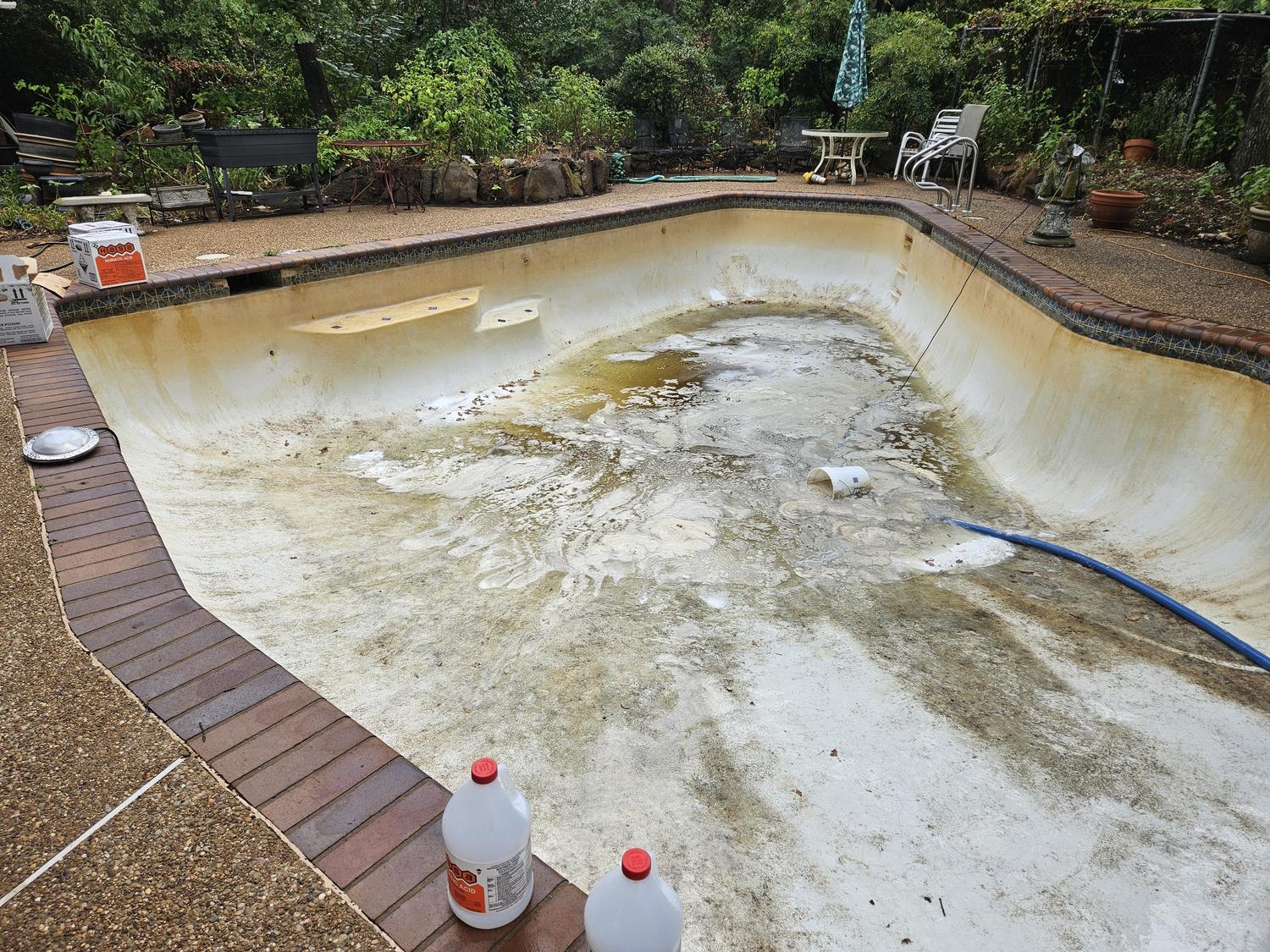
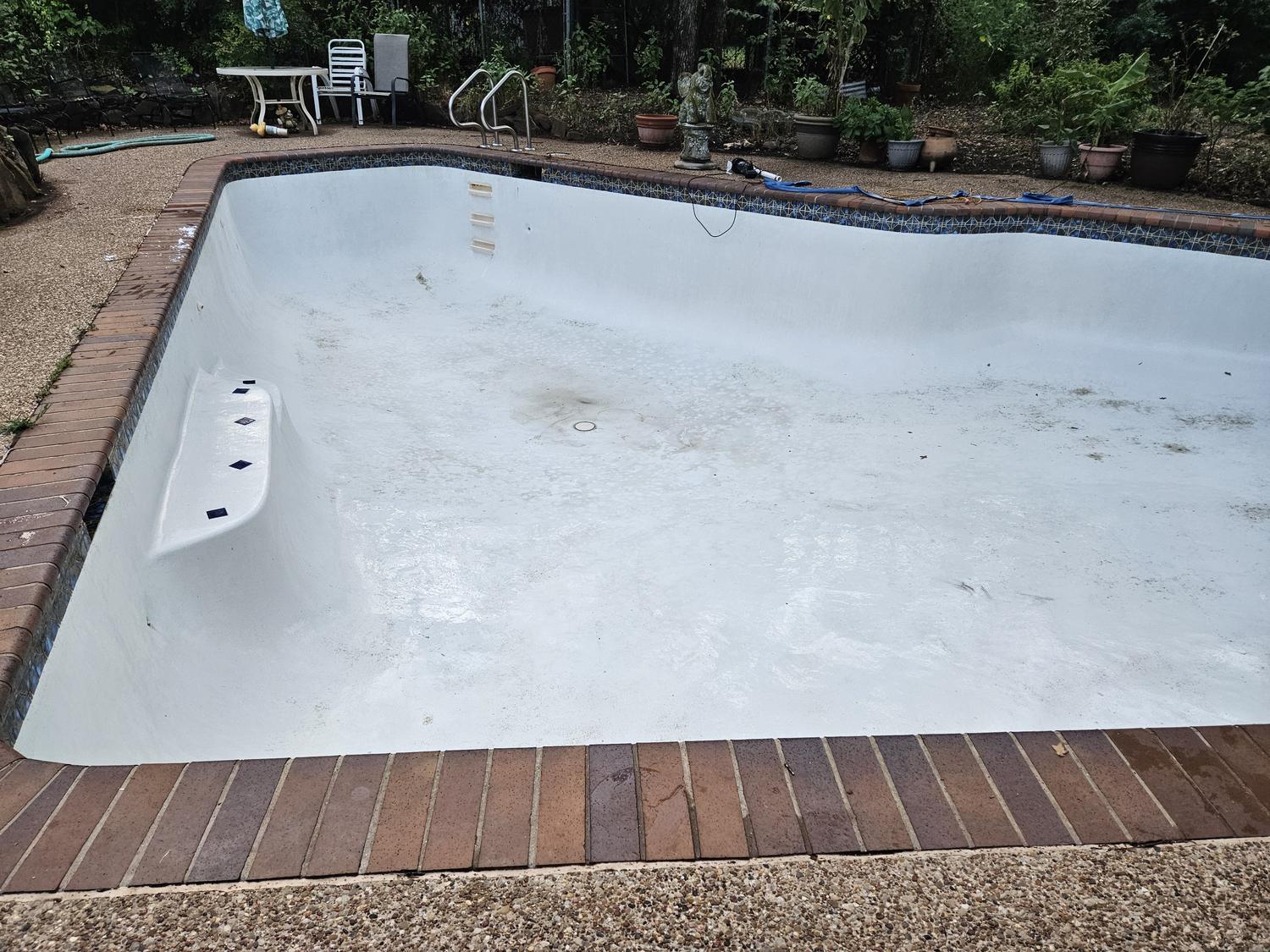
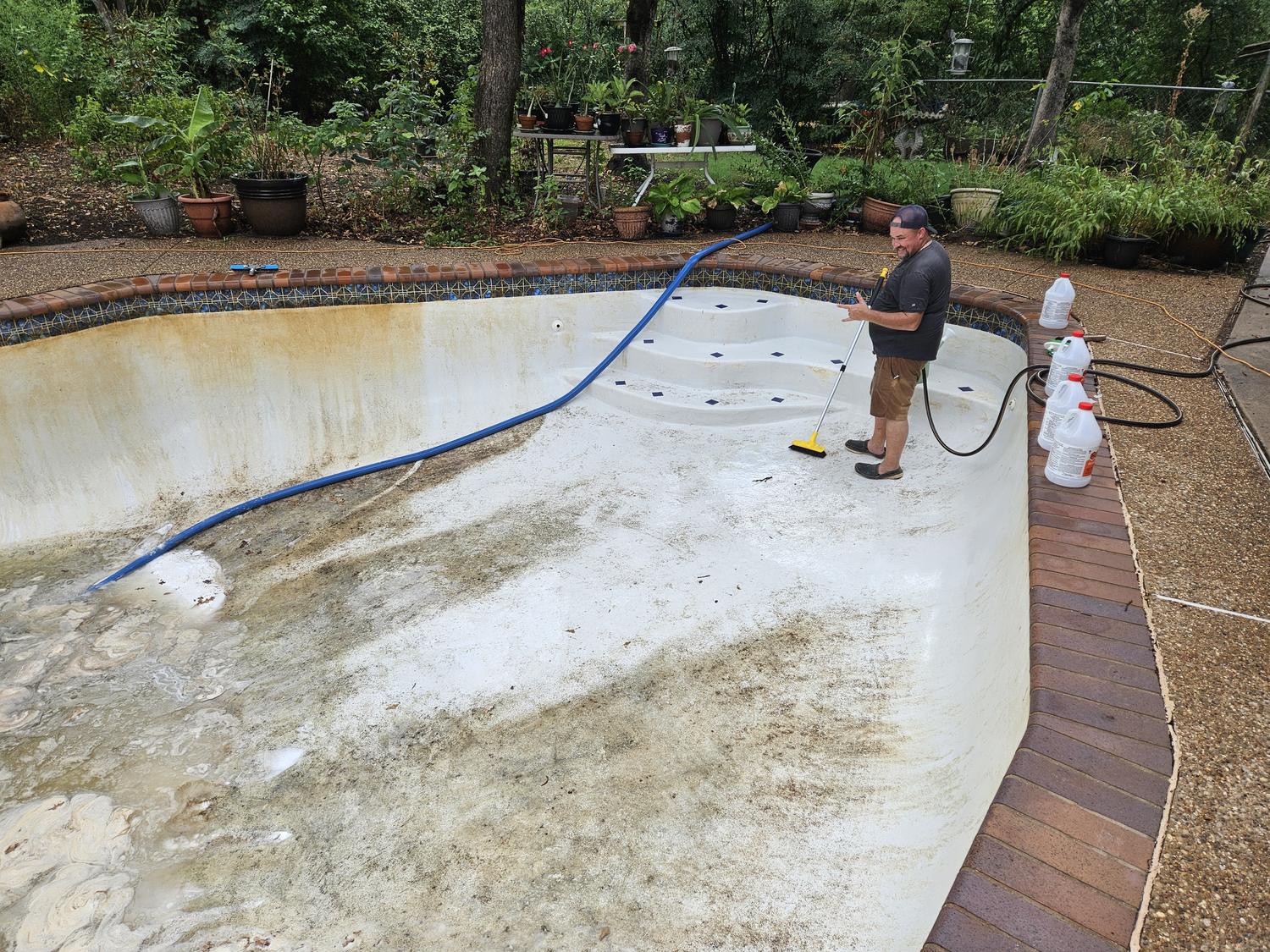
This one needed it. The staining had gone into the plaster, so clearing the water would not have fixed anything you could actually see.
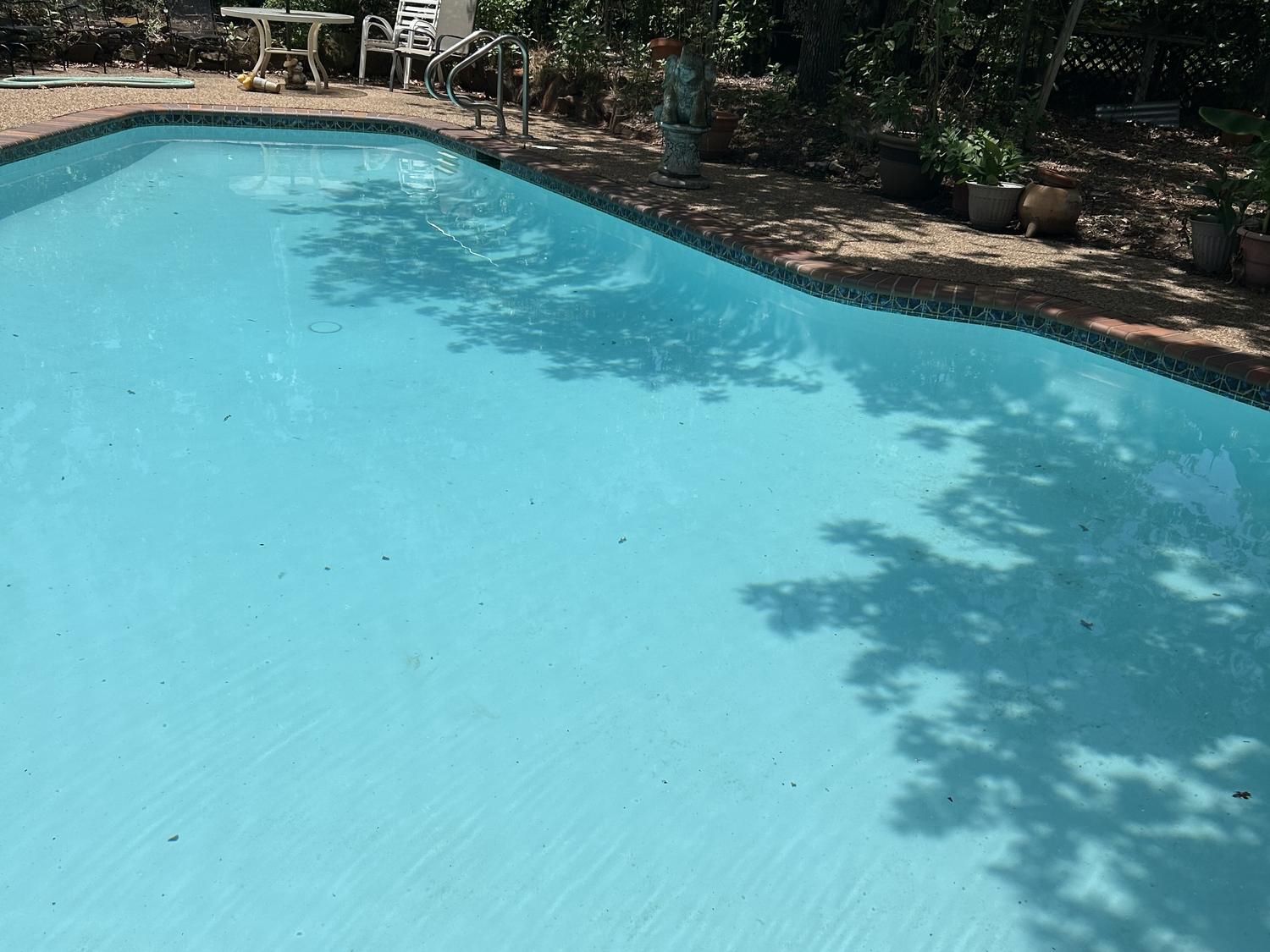
Photos from one job in Mansfield. Not stock images and not somebody else's pool.
Water turns green because it stopped moving, or stopped being filtered, or stopped being sanitised. Almost always something on the equipment pad is the reason.
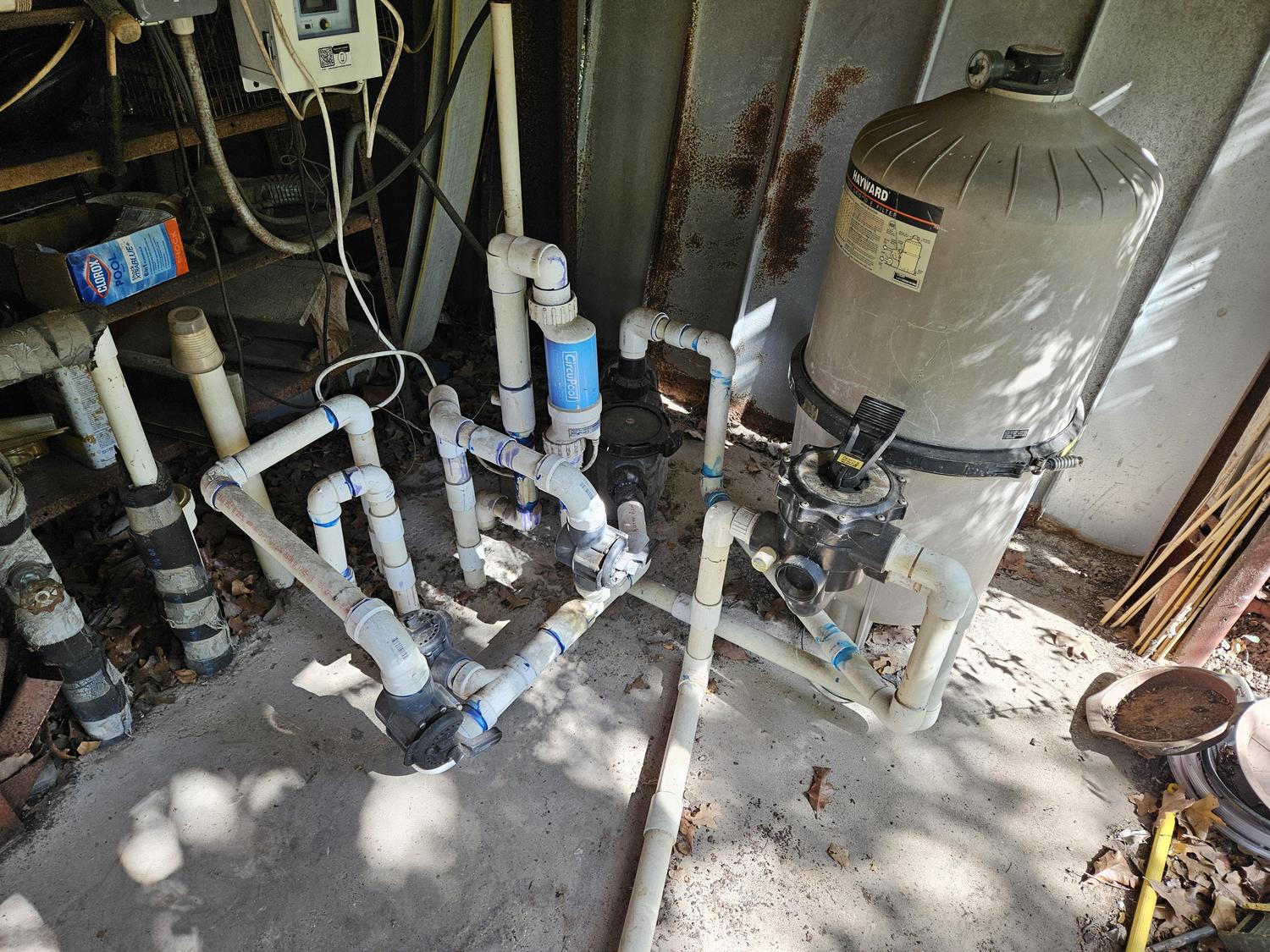
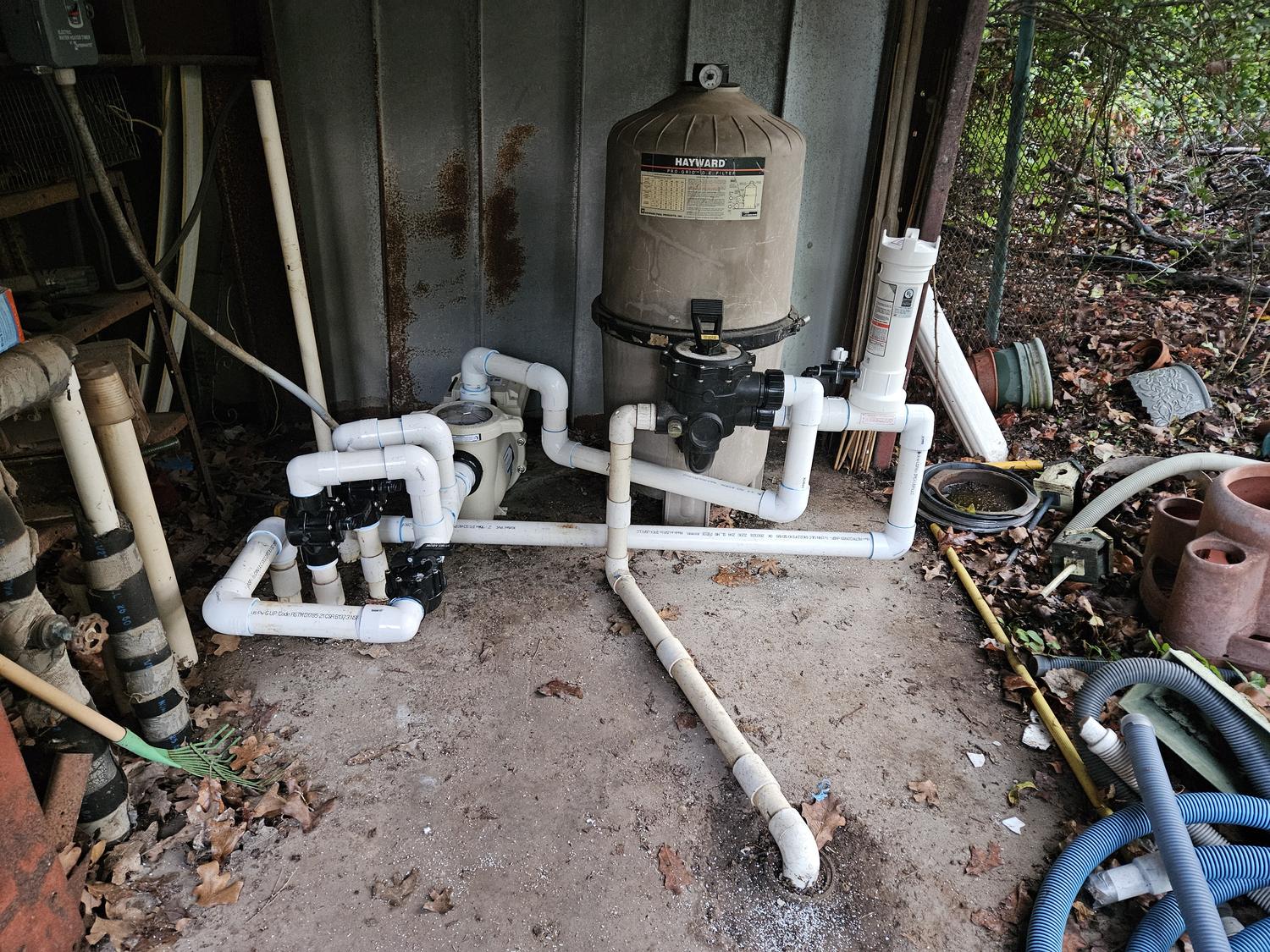
On this job the pad was rebuilt first, before the pool was ever drained. That is the right order. Clean the water without fixing what stopped it moving and you have bought yourself a few weeks, it goes green again, and the second recovery costs the same as the first.
Same property, same job as the pool above. Pad work is our own trade: see equipment repair and pump and equipment electrical.
Chlorine, pH, alkalinity, stabilizer and phosphates before anything else. The stabilizer number alone decides whether a chemical recovery has a chance, and it is the one most people never check.
A pool does not go green on its own. Usually the pump, the filter or the timer had something to do with it. We find that before we clean, or you will be calling again in a month.
Shock, brush, run and repeat, with the filter cleaned out as it loads. Pool stays full, no water bill, two to five days depending on how bad it is.
Controlled drain, debris out, plaster washed down, refill and rebalance the same job. The pool is never left sitting empty, for reasons below.
For staining that went into the plaster. An acid wash etches a thin layer off, a pressure wash takes it off mechanically. Neither is something to do casually or often. On worn plaster we will tell you to resurface instead.
The recovery is the expensive part. Weekly service afterwards costs a fraction of doing this twice. Plenty of people set that up once they have seen the bill.
The soil around Dallas and Fort Worth is expansive clay, and clay holds water. When a pool is full, the weight of the water holds the shell down against the groundwater underneath it. Empty that shell at the wrong time and the groundwater pressure can lift the pool out of the ground. It is not a rumour, and it is not cheap to fix.
Worth seeing side by side, because this is the whole reason it pays to check before you drain. Severity moves you through the range.
| Approach | What we charge |
|---|---|
| Chemical recovery, pool stays full | About $500 to $1,200 |
| Drain and clean with an acid wash or pressure wash | About $800 to $1,500 |
| Water to refill, paid to the city and not to us | About $50 to $200 |
| Weekly service afterwards | Quoted on the pool |
These are our real numbers, not a market survey, and most pool companies will not put them on a page. Where your pool lands in the range comes down to how far gone it is: how deep the staining went, how much debris is on the floor, the size of the pool and whether the equipment is working. A pool that has been sitting since last summer is not the same job as one that went over three weeks ago. We look at it before we price it. Refill water is a DFW city water estimate, from Poolburg, North Texas pool drain and refill.
A chemical recovery usually runs two to five days depending on how far gone the water is. The pool stays full the whole time and the filter does most of the work. A drain and clean is faster in the water but slower overall, roughly one to three days of work plus twelve to twenty four hours to refill.
Usually not. Most green pools clear up full, with chemicals and filter runtime. Draining is for pools where the plaster itself is stained under the water, where the water is so chemically loaded that the chemical cost passes the water cost, or where debris on the floor is too deep to vacuum out. We look before we recommend it, because draining is the expensive path.
Sometimes, and if it works it is the cheapest fix there is. It fails for predictable reasons: stabilizer built up so high that chlorine cannot do its job, phosphates feeding the algae faster than you can kill it, a filter that is undersized or full, or a pump that is not actually moving water. If you have already shocked it twice and it is still green, one of those is the reason.
Only with care. The expansive clay soil around Dallas and Fort Worth holds groundwater, and groundwater pressure under an empty shell can lift a pool out of the ground. A drained pool is refilled the same job, never left sitting, and it is not drained at all right after heavy rain. This is the part of the work that is worth paying somebody to get right.
Organic staining from algae almost always comes off. Mineral staining and scale need an acid wash or a pressure wash. If the plaster underneath is worn through to the point where it stains again within weeks, the honest answer is that it needs resurfacing rather than cleaning, and we will tell you that instead of selling you a wash that will not hold.
Expect roughly fifty to two hundred dollars on your city water bill depending on your rate and the size of the pool, and twelve to twenty four hours of fill time. That water cost is one of the reasons a chemical recovery is worth trying first when the pool is a candidate for it.
What it takes to never do this again. Chemistry, filter and equipment checked every week so the pool stays swim ready.
Pumps, filters, timers and sanitizers. If the pool went green while you were away, something on the pad usually had a hand in it.
When the plaster is past cleaning. Resurfacing, tile, coping and the rest of it, quoted honestly against just washing it again.
Easiest way to start. A picture of the pool and one of the equipment pad tells us most of what we need to know, and we can usually tell you on the phone whether you are looking at the cheap fix or the expensive one.