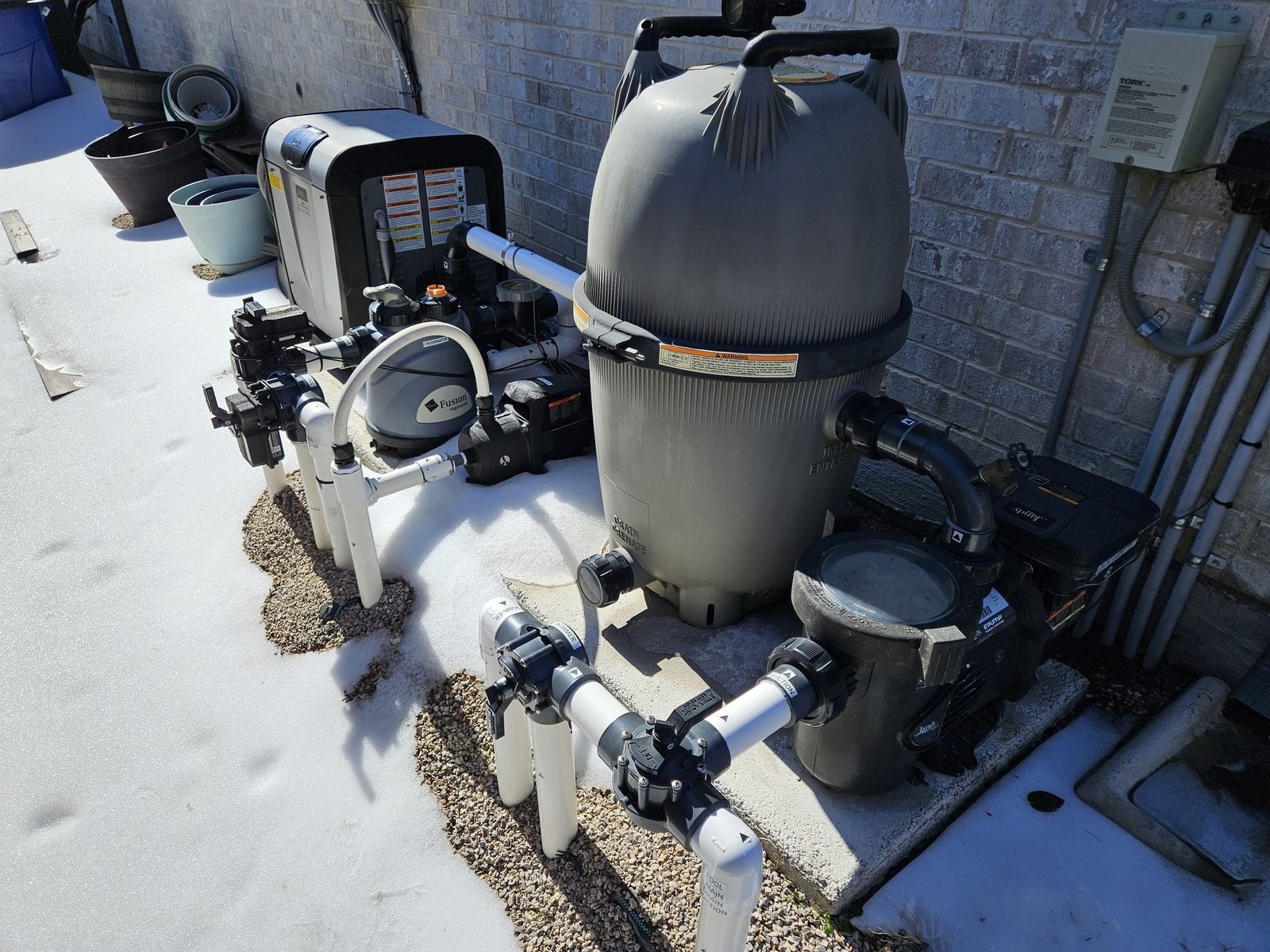
The wiring between your panel and your equipment pad is the part nobody looks at until something stops working. It is also the part that has to satisfy an electrical inspector, and as of September 2026 the rules it is measured against changed.
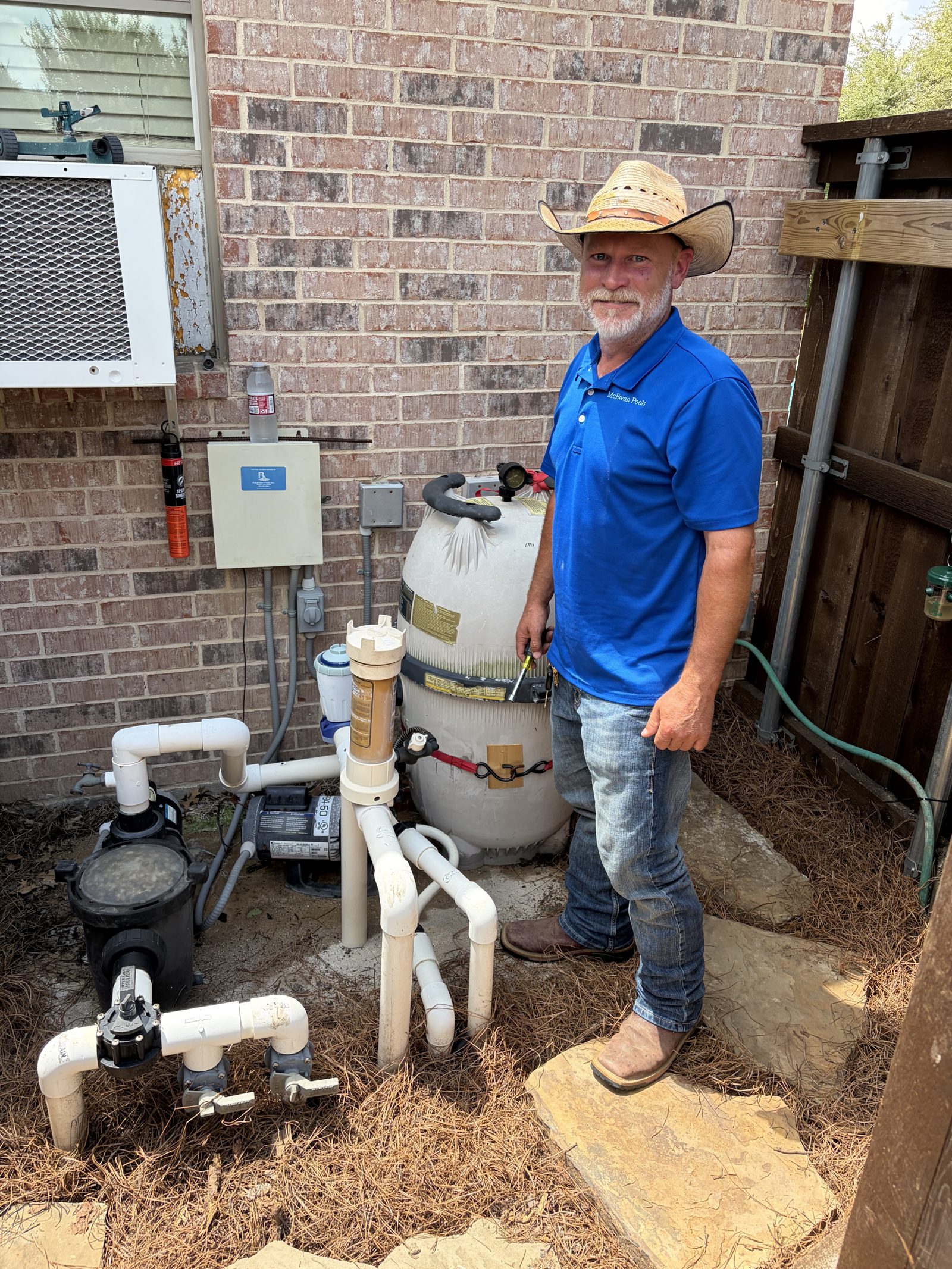
Verify the license. The electrical work is done by a journeyman electrician, Texas TDLR license 424069, working under the general supervision of a master electrician as Texas requires. You can look the license up yourself at the TDLR license search. Most pool companies cannot show you one.
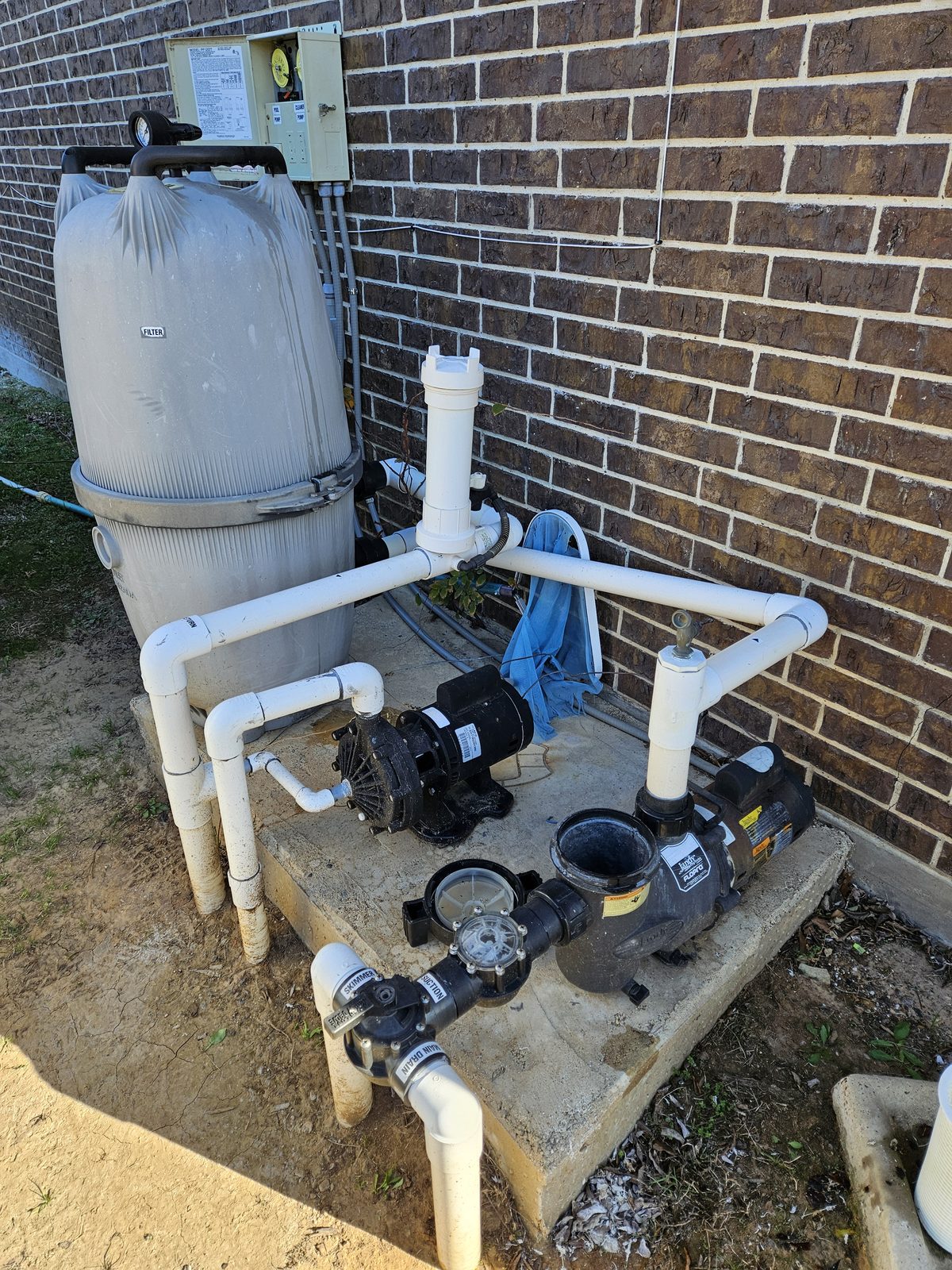
When a pool is built, the electrical is often the cheapest line item and the last one inspected. Undersized conductors, a disconnect that is not within sight of the equipment, conduit that was never sealed, a load center mounted where it gets soaked every time the deck is hosed. None of it stops the pool from running on day one. All of it shows up later as nuisance tripping, corroded terminals and equipment that dies early.
We are not going to tell you every pool needs a rewire. Most do not. But when a pump keeps failing or a breaker keeps tripping, the honest first question is whether the circuit feeding it was ever right, and that question is usually skipped because answering it takes an electrician.
Everything between your electrical panel and the equipment that runs your pool.
Dedicated circuits for pumps, heaters, salt systems and automation, sized for the load they actually carry rather than the one that was cheapest to install.
A means of disconnect at the equipment, so the next person who services your pump is not relying on somebody at the house flipping the right breaker.
Weatherproof conduit runs, proper fittings and sealed entries, because a pad sits outdoors in Texas sun and gets hosed down on purpose.
Pad subpanels and pool load centers, wired and labeled so a fault can be isolated without shutting down half the house.
Mechanical timers, digital controls and the power side of automation, replaced or rewired when the old one gives out.
Tracing an intermittent fault back to its actual cause instead of replacing equipment and hoping.
This is current as of September 2026. Codes get adopted and amended, so confirm anything that matters with your own building department before you act on it.
The Texas Commission of Licensing and Regulation adopted the 2026 National Electrical Code on July 28, 2026, with an effective date of September 1, 2026. Non-exempt electrical work started on or after that date is governed by the 2026 edition. Work that started while the 2023 edition was in force stays under the 2023 edition.
For a pool owner the practical effect is simple. If you are adding, replacing or altering pool electrical now, it gets measured against a code that is ten days old rather than the one your pool was built under. That is not a reason to panic about an existing pool. It is a reason not to assume an installer quoting from memory is quoting current rules.
Source: Texas Commission of Licensing and Regulation adoption, effective 2026-09-01. Verified September 2026.
The City of Mansfield requires a permit for construction, alteration and repair work, and that includes electrical systems. Single trade permits for electrical work are submitted through the city online. Mansfield also requires electrical contractors to be registered with the city, which means providing a state contractor license and liability insurance that names the city as certificate holder.
Two things follow from that. Permitted pool electrical work is pulled under a registered electrical contractor, not by whoever is cheapest that week. And unpermitted work does not stay invisible, it surfaces at resale or when an insurer asks.
Rules differ by city, and if your pool is in Kennedale, Burleson, Crowley or unincorporated Tarrant County the answer is not automatically the same. Confirm with your own building department. Mansfield Building Safety is on 817-276-4220.
Source: City of Mansfield Permits and Registration, verified September 2026. Tarrant County Public Health regulates public pools and spas, not residential backyard pools.
The City of Mansfield requires a permit for alteration and repair work including electrical systems, and requires electrical contractors to register with the city. Single trade electrical permits are filed through the city online system. Rules vary between cities, so confirm your specific job with Mansfield Building Safety on 817-276-4220 or with your own building department if you are outside the city.
Yes. The Texas Commission of Licensing and Regulation adopted the 2026 National Electrical Code effective September 1, 2026. Non-exempt work started on or after that date follows the 2026 edition. Work already underway before that date stays under the 2023 edition.
Generally no. Existing installations are not required to be rebuilt every time the code changes. What does get measured against current code is new work: a replacement, an addition or an alteration. That is why a pump swap can trigger a requirement that the original installation never had.
Most pool companies are not electricians and subcontract it or leave it to the homeowner. Ask directly whether the person doing the electrical holds an electrical license, and ask for the number. A license number can be looked up in about ten seconds at the TDLR license search.
If your pool electrical has never been looked at by an electrician, that is worth one visit rather than three more equipment replacements.