★ 5.0 rating on Google · Licensed & insured · 25+ years
Mon–Fri 9am–5pm · (817) 793-2977
Home  /  Pool Heaters  /  Heat Pump or Gas
The honest comparison

Heat Pump or Gas Pool Heater in North Texas?

The short version: a heat pump is the cheaper heater for most of the year here, and the wrong heater for the two months you most want one. It is also the one that needs a 50 amp circuit. Here is the arithmetic, with the sources, so you can check it.

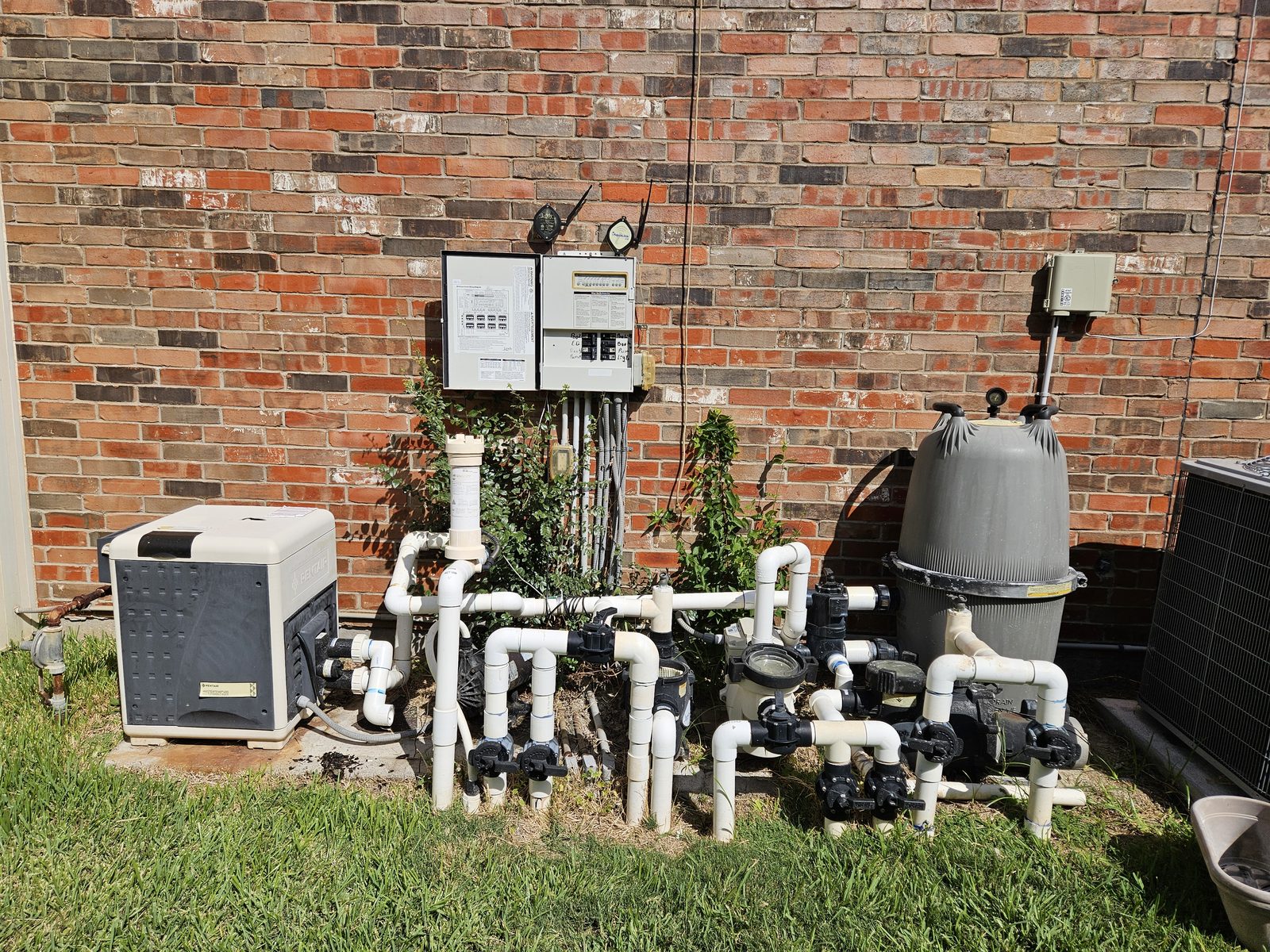
Pool heater and equipment set on a McEwan Pools pad
Start here

The number on the brochure is measured in weather you do not need a heater for

Pool heat pumps are rated at two conditions. The one in the advertising is taken at 80 degree air. The other one, on the same spec sheet, is taken at 50 degree air. Here is what happens between them, straight from two major manufacturers.

UnitAt 80°F airAt 50°F airCapacity lost
Pentair UltraTemp 110110,000 BTU · COP 6.170,000 BTU · COP 4.036%
Pentair UltraTemp 140145,000 BTU · COP 5.890,000 BTU · COP 4.038%
Hayward HeatPro 140K140,000 BTU · COP 5.785,000 BTU · COP 4.039%

Both manufacturers land on exactly COP 4.0 at the 50 degree rating point, and both lose better than a third of their heating capacity getting there. Sources: Pentair 2025 to 2026 pool product catalog · Hayward HeatPro Low Ambient sell sheet.

None of that is a scandal. It is physics. A heat pump moves heat out of the outside air, and when there is less heat in the air it moves less of it. The problem is only that the number you are shown is the one from August and the number that matters is the one from January.

Local reality

What a Mansfield winter actually looks like

The threshold that matters is about 50 degrees. Here are the official normals for Dallas Fort Worth.

MonthNormal mean temperatureNormal overnight low
October67.7°F57.1°F
November56.4°F46.2°F
December48.1°F38.3°F
January46.3°F36.1°F
February50.5°F40.1°F
March58.2°F47.8°F

National Weather Service Fort Worth, 1991 to 2020 normals for DFW. See the records and normals page.

December and January sit below the 50 degree line and February is on it. The overnight column matters too, because a heat pump runs at night as well, and 36 to 40 degrees is at or below the minimum operating temperature manufacturers publish for these units.

One more number worth knowing: the Department of Energy's own pool heating model assumes the Dallas swimming season runs April 1 to October 31. Everything outside that window is what a heater is buying you, and it is exactly the window where a heat pump is weakest.

Running cost

What each one costs to actually deliver heat

Heat sourceCost per million BTU delivered to the water
Heat pump at 80°F airAbout $8
Heat pump at 50°F airAbout $12
Natural gas heater, 84% efficientAbout $19
Condensing gas heater, 96% efficientAbout $17
Propane heater, 84% efficientAbout $39

Our estimate, calculated from published rates and manufacturer efficiencies rather than quoted from anyone. Inputs: Texas residential electricity about 16 cents per kilowatt hour and Texas residential natural gas about $16.47 per thousand cubic feet in January 2026, both from the US Energy Information Administration, plus Texas propane at $2.989 per gallon. Your rate plan will differ.

The honest headline is that in North Texas a heat pump costs roughly half to two thirds of what natural gas costs for the same heat. That is a genuine saving. It is not the three or four times saving the industry likes to quote, because Texas electricity is cheap and Texas residential gas is not.

Propane changes everything. If you are on propane rather than a gas main, the heat pump is three to five times cheaper to run, not one and a half. That gap can justify a panel upgrade that would never pay for itself on natural gas. Tell us which fuel you have before anything else in this conversation.

The line nobody quotes

One of these needs 50 amps. The other needs 15.

A residential pool heat pump is typically a dedicated 240 volt circuit at 40 to 60 amps, with a minimum circuit ampacity around 38 to 42 amps on common models. A gas heater is commonly a 15 amp circuit, and some condensing models run on 15 amps flat.

So the heat pump that looked about a thousand dollars more expensive on the equipment quote can be several thousand more once the electrical is real. Around here a new or upgraded circuit runs about $250 to $2,100, and if the panel is already full, a service upgrade is another $1,500 to $4,000.

None of that makes a heat pump the wrong choice. It makes it a choice you should price honestly before you commit. We open the panel first. That is a five minute job that has saved more than one customer from a very expensive surprise.

Verify the license. The electrical work is done by a journeyman electrician, Texas TDLR license 424069, working under the general supervision of a master electrician as Texas requires. You can look the license up yourself at the TDLR license search. Most pool companies cannot show you one.
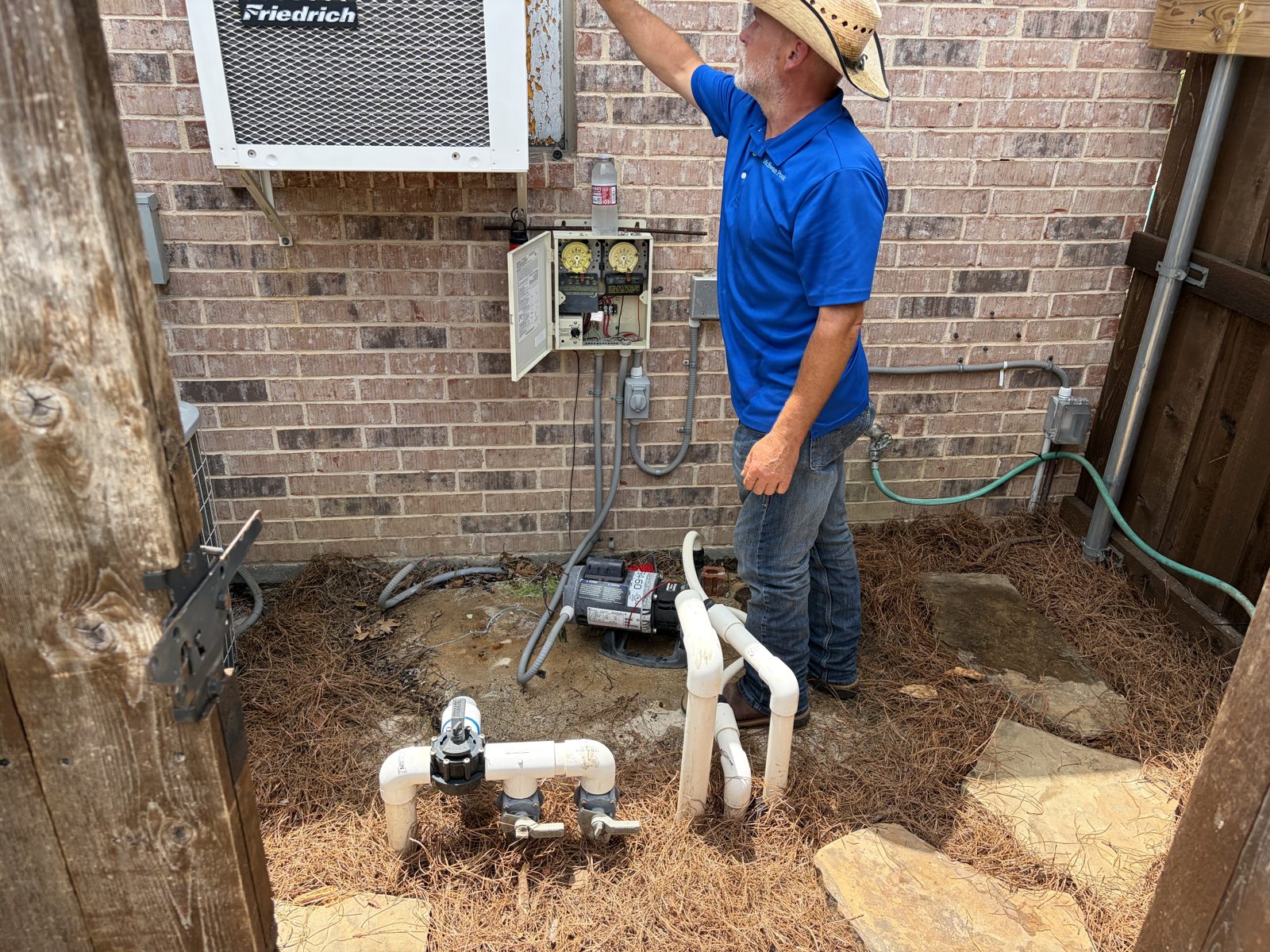
McEwan Pools working on pool equipment electrical at the panel
The decision

So which one should you buy?

Take the heat pump if

You swim spring through fall, you are happy to plan a day or two ahead for warm water, your panel can carry the circuit, and especially if you are on propane rather than a gas main.

Take gas if

You want the pool warm this weekend in January, you use the pool occasionally rather than constantly, you already have adequate gas service, or your electrical panel has nothing left to give.

Consider both if

Hybrid units exist that pair a heat pump with a gas burner in one cabinet and switch between them. They cost more up front and they solve exactly the North Texas problem described on this page.

One thing neither heater fixes: a heat pump cannot warm your pool by Saturday. It is a slow, steady appliance, and at 50 degree air it can take the better part of a day to move a typical pool ten degrees, before you account for what the pool loses back to the sky overnight. If your use pattern is spontaneous, that alone decides it.

And whichever you buy, put a cover on the pool. It saves more than the difference between these two.

Common questions

Heat pump and gas heater FAQs

Is a heat pump or a gas heater better for a pool in Dallas Fort Worth?

For most of the swimming season a heat pump is cheaper to run. For December and January it is the weaker choice, because a heat pump pulls heat out of the outside air and there is less of it to pull. Dallas Fort Worth normal mean temperatures are 48.1 degrees in December and 46.3 in January, which is below the 50 degree mark where heat pumps start losing efficiency. If you only swim spring through fall, take the heat pump. If you want the pool warm on a cold weekend in January, take gas.

At what temperature does a pool heat pump stop working?

It does not stop suddenly, it degrades. The Department of Energy says heat pumps are most efficient heating air above 50 degrees and work efficiently as long as outside air stays above the 45 to 50 degree range. Manufacturers publish a minimum operating temperature around 40 degrees. Between those two numbers the unit still runs, it just runs longer and costs more per degree, and it starts spending time defrosting instead of heating.

Why do the heat pump brochures show such high efficiency?

Because they quote the rating taken at 80 degree air, which is weather in which you do not need a pool heater. The same spec sheets carry a second rating at 50 degree air. Pentair and Hayward both publish coefficient of performance falling from roughly 5.7 to 6.1 down to 4.0, and heating capacity dropping by roughly a third, between those two conditions. The 50 degree number is the one that matters in a Mansfield November. Ask any salesperson for it in writing.

How much does it cost to run each one here?

Texas residential electricity ran about 16 cents per kilowatt hour in mid 2026 and Texas residential natural gas ran about $16 to $19 per thousand cubic feet through the heating season. On those rates a heat pump costs roughly half to two thirds of what natural gas costs per unit of heat actually delivered to the water. That is a real advantage, but it is smaller than the three to four times saving the industry usually advertises, because Texas electricity is cheap and Texas residential gas is not.

What if my house is on propane instead of natural gas?

Then the answer changes and it changes hard. At Texas propane rates a propane heater costs roughly twice what natural gas costs and three to five times what a heat pump costs for the same heat. If you are on propane out in Rendon or Crowley, a heat pump can justify a panel upgrade that would never pay for itself on natural gas. Tell us which fuel you have before anything else.

Does a heat pump need special electrical work?

Yes. A residential pool heat pump is typically a dedicated 240 volt circuit at 40 to 60 amps. A gas heater is commonly 15 amps. That difference is the whole reason one of these jobs needs an electrician and the other mostly does not. If your panel is already full, the circuit work can cost more than the price difference between the two heaters, which is why we open the panel before we quote.

Tell us your pool and your panel

We will tell you which heater actually makes sense for your pool, your fuel and your electrical service, and what it costs including the parts other companies leave off the quote.

Call (817) 793-2977