★ 5.0 rating on Google · Licensed & insured · 25+ years
Mon–Fri 9am–5pm · (817) 793-2977
Home  /  Pool Heater Repair & Installation
Before the weather turns

Pool Heater Repair and Installation in Mansfield

A heater is the difference between a pool you look at from November to March and one you actually swim in. It is also the most electrical piece of equipment on the pad, which is the part most pool companies hand off to somebody else. We do not hand it off.

Verify the license. The electrical work is done by a journeyman electrician, Texas TDLR license 424069, working under the general supervision of a master electrician as Texas requires. You can look the license up yourself at the TDLR license search. Most pool companies cannot show you one.

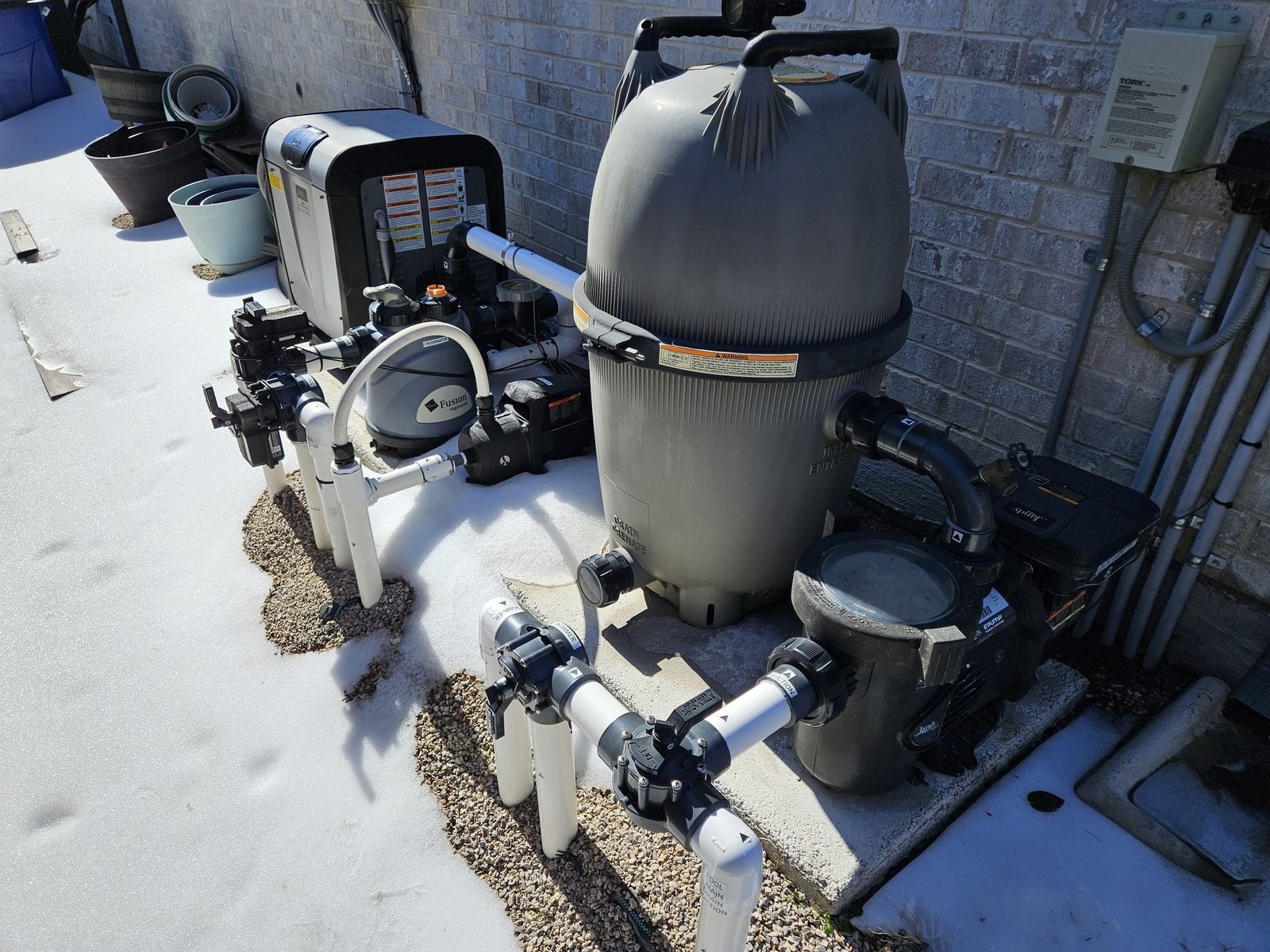
Pool heater installed on a McEwan Pools equipment pad
Why this job is different

A gas heater needs 15 amps. A heat pump needs 50.

That one line explains why heater work goes wrong so often. A gas heater is mostly plumbing and gas, and it sips power. A pool heat pump is a 240 volt appliance on its own dedicated circuit, typically 40 to 60 amps, with a minimum circuit ampacity around 38 to 42 amps on the units most people buy. If your panel cannot carry it, that is a problem you want found before the equipment is ordered, not after it is sitting on the pad.

The code is specific about this. The branch circuit has to be sized at 125 percent of the heater nameplate. A maintenance disconnect has to be readily accessible and within sight of the equipment, and at least five feet from the water. The heater housing has to be bonded into the pool bonding grid with 8 AWG solid copper. And under NEC 680.28, even a gas fired pool heater has to be on a GFCI protected circuit.

Texas moved to the 2026 National Electrical Code on September 1, 2026. The code that applies to your job is the one in force when the permit is pulled, and requirements vary by city. We pull the permit.

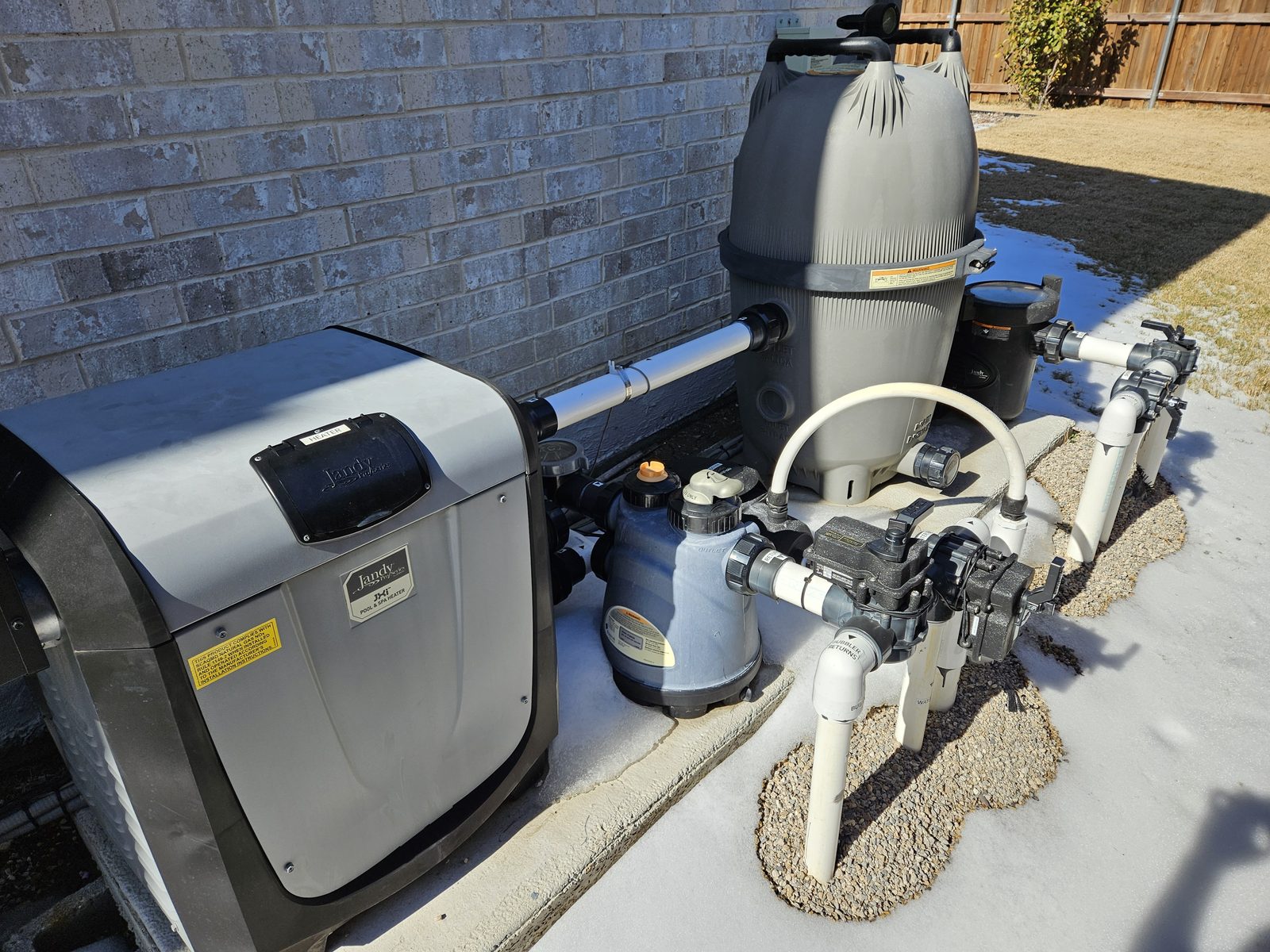
Heater and equipment set wired and installed by McEwan Pools
What we do

Heater work, start to finish

The equipment and the electrical, by one company that is accountable for both.

Heat Pump Installation

Sized for your pool, set on a proper pad, wired on its own 240 volt circuit with the disconnect and bonding done to code.

Gas Heater Installation

Pentair, Jandy and Hayward. We check the gas meter and line capacity first, because an undersized supply will starve a new heater.

Heater Repair & Diagnosis

Ignition faults, no fire, short cycling, error codes and heaters that run but never reach temperature. Root cause, not parts roulette.

Control Boards & Sensors

Boards, igniters, thermistors, high limits, pressure switches and gas valves. The electronics side that most pool techs will not touch.

Circuits, Breakers & Disconnects

New heater circuits, correctly sized breakers, disconnects within sight, and panel capacity checked before you buy equipment.

Bonding & GFCI

Heater housings bonded into the pool grid, GFCI protection done properly, and older pads brought up to current requirements.

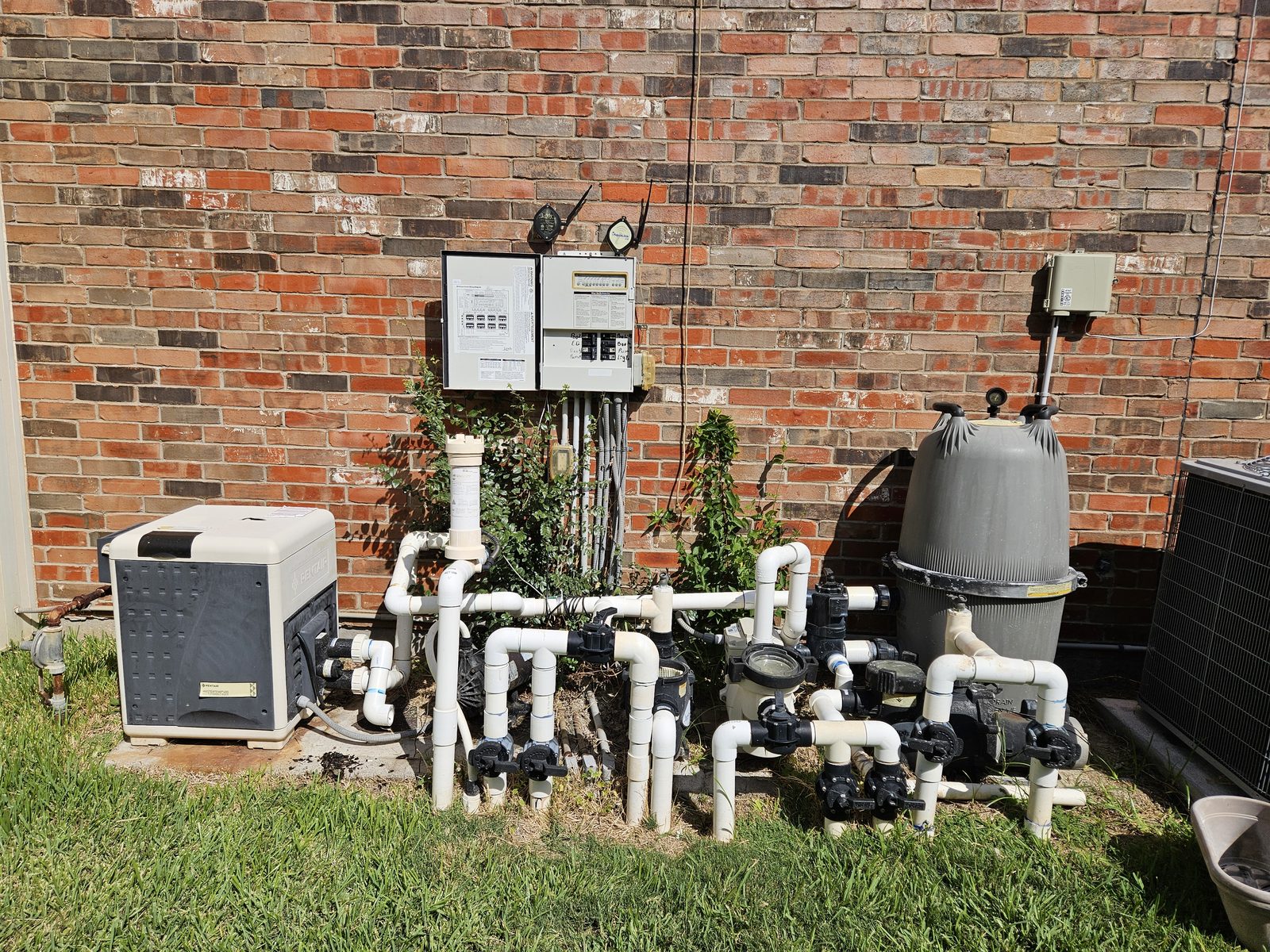
McEwan Pools diagnosing pool equipment at the pad
When to call

Signs your heater needs attention

  • It fires, runs for a minute or two, then shuts off
  • It runs constantly and never reaches the set temperature
  • An error code on the display, or no display at all
  • The breaker or GFCI trips when the heater calls for heat
  • Rust, scale, soot or a burning smell at the heater
  • It worked last season and will not start this one

Call (817) 793-2977

More detail in our guide: five signs a pool heater needs repair.

Worth saying out loud

The cheapest thing you can do for a cold pool is not a heater

Evaporation is the largest single way a pool loses heat, and a cover stops most of it. The Department of Energy publishes annual pool heating costs by city, and Dallas is one of them. In their model, holding a pool at 80 degrees with a gas heater costs about $2,616 a year uncovered and about $382 a year with a cover. For a heat pump the same comparison is about $1,321 against about $191.

That is roughly an 85 percent reduction from a cover alone, which is a bigger swing than the difference between any two heaters you could buy. Their model assumes a 1,000 square foot pool, which is about double a typical backyard pool here, so treat the figures as the shape of the answer rather than your exact bill. The point stands at any size. If you are about to spend money on heat, spend the first hundred dollars of it on a cover.

We will still sell you a heater. We would rather you buy the right one and run it for less.

Sources: US Department of Energy, swimming pool covers · DOE gas pool heater operating costs · DOE heat pump pool heater operating costs.

What it costs

Where the money actually goes

Most quotes cover the heater and go quiet about the utility side. That is where jobs blow up.

Line itemDallas area range
Gas heater, installedAbout $1,500 to $6,000
Heat pump, installedAbout $2,500 to $7,500
New or upgraded electrical circuitAbout $250 to $2,100
Gas line run to the padAbout $500 to $2,000
PermitsAbout $100 to $500
Panel upgrade, if the panel is fullAbout $1,500 to $4,000

Ranges are Dallas area market figures, not our quote. Yours depends on the equipment, the run length and what your panel and gas meter can already carry, which is why we look at both before we price anything. Source: Angi, cost to install a pool heater in Dallas, updated March 2026.

Heater questions

Pool heater FAQs

Do I need an electrician to install a pool heater?

For a heat pump, yes. A residential pool heat pump typically runs on a dedicated 240 volt circuit at 40 to 60 amps, and the National Electrical Code requires the branch circuit to be sized at 125 percent of the nameplate rating, with a disconnect within sight of the equipment. Even a gas heater needs a GFCI protected circuit under NEC 680.28. There is no such thing as a pool heater installation with no electrical work in it.

How much does a pool heater cost to install around Mansfield?

Dallas area figures put a gas heater at roughly $1,500 to $6,000 installed and a heat pump at roughly $2,500 to $7,500. Those are equipment and install only. Budget separately for the utility side: adding or upgrading an electrical circuit runs about $250 to $2,100 locally, running a gas line about $500 to $2,000, and permits about $100 to $500. We look at your panel and your gas meter before quoting, because that is where the surprises live.

Should I get a heat pump or a gas heater in North Texas?

A heat pump is cheaper to run for most of the year here and it is the weaker choice in December and January, which is exactly when you want heat. A gas heater costs more per hour to run and does not care how cold it is outside. We wrote the full comparison with the manufacturer numbers and the Dallas Fort Worth weather data on our heat pump versus gas page.

My heater fires and then shuts off. What is that?

Most often it is flow, not the heater. Every heater needs a minimum flow rate to stay lit, commonly 20 to 40 gallons per minute depending on the model. A variable speed pump set too low, or a filter that has loaded up since the setting was made, will drop flow below that point and the heater will cycle off. It can also be a pressure switch, a sensor or an ignition fault. We diagnose the cause rather than swapping parts.

Can you repair my heater or do I have to replace it?

Often it can be repaired. Control boards, igniters, sensors, pressure switches, gas valves and heater circuits are all repairable items. The honest answer depends on age and what failed. A gas heater has a typical service life shorter than a heat pump, so a major heat exchanger failure on an older unit usually points to replacement. We tell you which one you are looking at before you spend anything.
Go deeper

Before you choose a heater

Get the heater sorted before you want it

Heater season in North Texas is short and it arrives fast. The time to find out your panel is full or your gas line is undersized is now, not the first cold weekend you wanted to swim.

Call (817) 793-2977